
A carpet stain is often easier to make worse than to remove. Using too much water, scrubbing aggressively or applying the wrong household chemical can spread the mark, damage the fibers or leave detergent residue that attracts dirt again.
The safest approach depends on what caused the stain, the carpet material, how long the mark has been present and whether previous cleaning products have already been used.
This guide explains how to respond to common carpet stains, what to avoid and when professional treatment is the safer option. For detailed extraction cleaning, see our
professional carpet and curtain cleaning service in Dubai.
Quick Answer: How Should You Treat a Carpet Stain?
For a fresh spill, remove excess liquid or loose material first and blot the area gently rather than rubbing it.
Avoid flooding the carpet with water or mixing strong household chemicals. Before applying any product, consider the carpet material and test an inconspicuous area where appropriate.
Older, unidentified or previously treated stains are usually more difficult and may be better assessed professionally.
Why Carpet Stains Can Be Difficult to Remove
A stain may affect more than the visible surface of the carpet.
Depending on the incident, contamination can reach:
- Surface fibers
- Deeper pile
- Carpet backing
- Underlay beneath the carpet
This is why a mark can appear to disappear temporarily and then become visible again after drying.
1. Blot Fresh Spills — Do Not Scrub
When a spill is fresh, the first goal is to remove as much excess liquid as possible without spreading it.
Use a clean absorbent white cloth or suitable paper towel and blot gently from the outside of the spill toward the centre.
Aggressive rubbing can:
- Push contamination deeper into the fibers
- Spread the stain
- Distort the carpet pile
- Damage delicate fibers
2. Remove Solid Material Carefully
If the spill contains food, mud or another solid material, remove the loose material carefully before introducing moisture.
Avoid pushing debris deeper into the carpet.
For dried material, gentle vacuuming may help once the area is completely dry and the material is suitable for vacuum removal.
3. Avoid Over-Wetting the Carpet
Using excessive water is one of the most common DIY carpet-cleaning mistakes.
Too much moisture can:
- Push the stain deeper
- Spread contamination
- Leave detergent behind
- Increase drying time
- Affect backing materials
- Create water marks
Controlled moisture is particularly important when the carpet construction and backing are unknown.
4. Do Not Mix Household Cleaning Chemicals
Different carpet stains require different treatment. Mixing household products without knowing how they react with each other or with the carpet fiber can cause permanent damage.
Potential problems include:
- Color loss
- Bleaching
- Fiber damage
- Sticky residue
- Permanent discoloration
More chemical does not necessarily mean better cleaning.
5. Test Products Before Treating a Large Area
When using a suitable carpet-cleaning product, an inconspicuous test area can help identify unwanted color changes or material reactions before the main stain is treated.
This is particularly important for:
- Colored carpets
- Wool
- Natural fibers
- Older carpets
- Carpets with an unknown cleaning history
Common Types of Carpet Stains
Coffee and Tea
Fresh coffee or tea should be blotted promptly to remove as much liquid as possible.
Avoid spreading the stain with excessive rubbing. Milk, sugar or other ingredients may make the contamination more complex because the mark can contain more than the beverage itself.
Food Stains
Remove suitable solid material first, then assess the remaining stain.
Oily foods may require a different treatment from water-based spills, so using a single general household cleaner is not always effective.
Pet Accidents
Pet-related stains can involve both visible contamination and odor.
Blotting fresh liquid quickly can help, but contamination that has reached deeper layers may require professional extraction and additional treatment.
Complete odor removal cannot always be guaranteed when contamination has penetrated deeply into carpet backing or underlay.
Mud and Sand
Wet mud is often easier to spread. Where appropriate, allow suitable mud to dry before removing loose material carefully through vacuuming.
The remaining mark can then be assessed for further cleaning.
Grease and Oil
Grease-based stains are different from ordinary water-based spills.
Using large amounts of water alone may not remove oily residue and can spread the affected area.
These stains often benefit from products specifically selected for oily contamination and the carpet material.
Makeup and Cosmetic Products
Makeup can contain oils, pigments and other ingredients that require careful treatment.
Aggressive rubbing may push the pigment further into the fibers.
Unknown Old Stains
Older stains are more difficult because it may no longer be clear what caused them or which products were previously applied.
Professional cleaners should therefore assess the stain before promising complete removal.
Why Old Carpet Stains Can Be Harder to Remove
Over time, contamination can bond more strongly with carpet fibers or permanently alter their color.
An old stain may also have been treated previously with household chemicals, which can change how the fabric responds to professional products later.
Professional cleaning can often improve old stains, but complete removal cannot be guaranteed.
Why Some Carpet Stains Come Back After Cleaning
A stain that seems to return after drying may be the result of contamination remaining deeper in the carpet or backing.
As moisture dries, residue can move back toward the surface and become visible again.
This is sometimes called stain reappearance or wicking.
It does not necessarily mean the carpet was never cleaned; it may indicate that deeper contamination requires further treatment or extraction.
Can Professional Carpet Cleaning Remove Every Stain?
No responsible cleaning company should promise complete removal of every stain before inspection.
The final result depends on:
- Stain type
- Age of the stain
- Carpet fiber
- Carpet color
- Previous products used
- Whether the stain reached the backing
- Whether the material has permanently discolored
Cleaning can remove contamination that is safely treatable, but it cannot reverse permanent fiber damage or color loss.
How Professional Carpet Cleaning Works
The exact method depends on the carpet, but professional cleaning may include:
- Visual assessment
- Dry vacuuming
- Identification of stains and heavily affected areas
- Selection of carpet-appropriate products
- Pre-treatment where suitable
- Controlled agitation where appropriate
- Rinsing and extraction
- Additional stain treatment where appropriate
- Final extraction of excess moisture
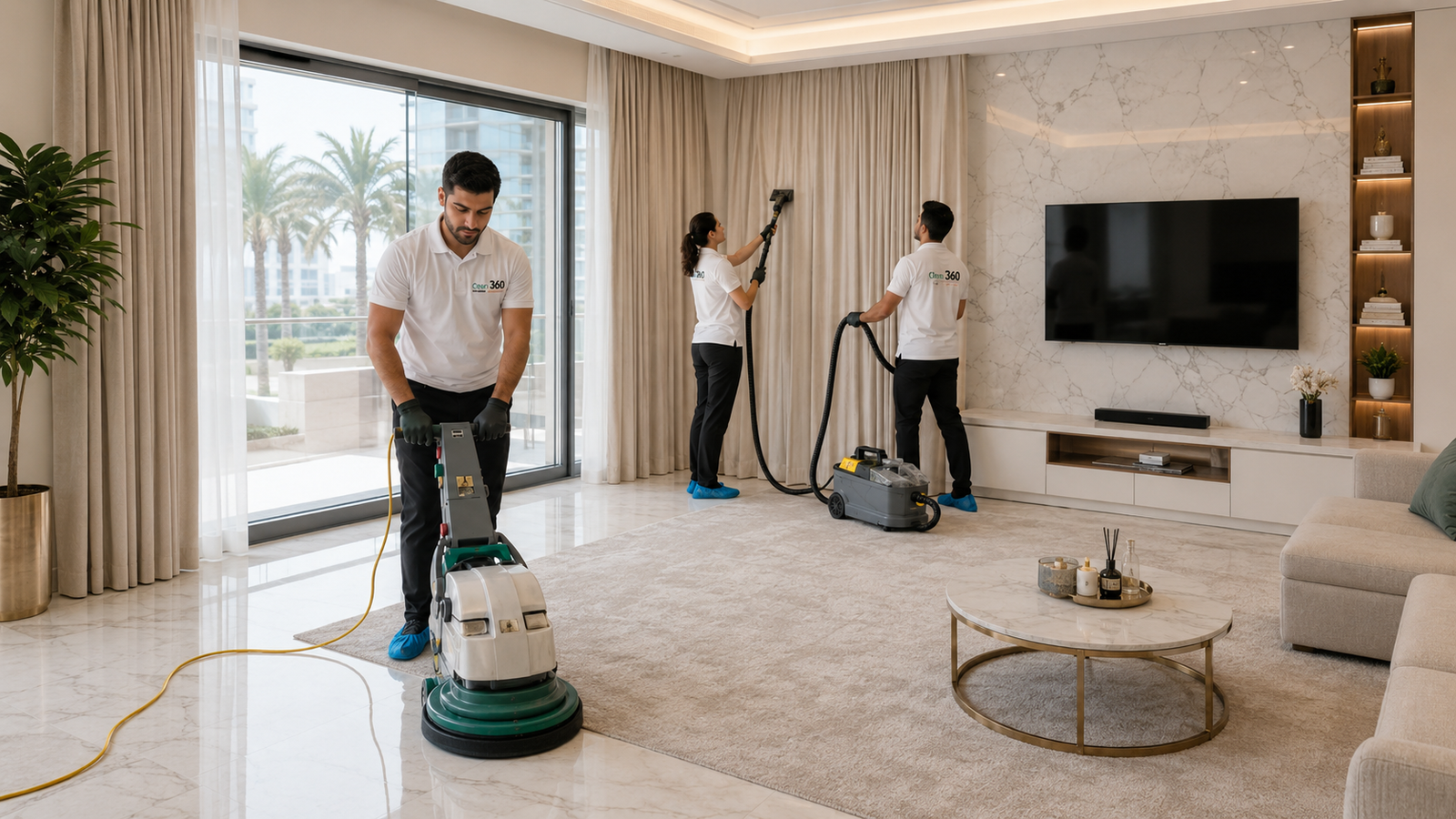
Clean360 uses professional equipment and cleaning methods selected according to the carpet material and condition rather than applying one process to every carpet.
Why Rinsing and Extraction Matter
A carpet can look cleaner after detergent is applied while still containing chemical residue within the fibers.
Extraction helps remove loosened contamination, cleaning solution and moisture rather than leaving large amounts of product behind.
This is one reason professional extraction cleaning differs from simply applying foam or shampoo to the carpet surface.
How Long Does a Carpet Take to Dry?
Drying time depends on:
- Carpet construction
- Fiber type
- Thickness
- Amount of moisture used
- Ventilation
- Air conditioning
- Indoor humidity
The carpet should be allowed to dry sufficiently before heavy use.
Because property conditions vary, exact drying times should not be guaranteed without assessing the carpet and environment.
Carpet Cleaning vs General Deep Cleaning
Professional carpet extraction is a specialist service and is normally separate from standard apartment or villa deep cleaning.
General
apartment and villa deep cleaning
may include vacuuming suitable carpeted areas, but it does not automatically include extraction, stain treatment or professional carpet washing.
Carpet Cleaning After Renovation
Carpets exposed to renovation work can contain large amounts of fine construction dust.
However, the property may also require cleaning of walls, cabinets, windows, floors and construction residue.
Where the entire property has recently undergone renovation, see our
post-construction cleaning service in Dubai
rather than treating the carpet as the only affected surface.
Carpet Cleaning in Move-In and Move-Out Properties
Carpet condition is particularly noticeable in an empty property.
If an apartment or villa requires general handover cleaning as well as professional carpet extraction, both requirements should be identified before booking.
For empty-property cleaning, see our
move-in and move-out cleaning service.
What Not to Do With a Carpet Stain
Avoid:
- Aggressively scrubbing the stain
- Flooding the carpet with water
- Mixing unknown household chemicals
- Using bleach without confirming material compatibility
- Applying excessive detergent
- Using very hot water without understanding the carpet fiber
- Repeatedly treating the stain without rinsing residue
If a stain has already been treated unsuccessfully several times, further DIY treatment can make professional assessment more difficult.
When Should You Call a Professional?
Professional assessment is particularly useful when:
- The stain is old
- The cause is unknown
- The carpet is delicate or expensive
- The stain covers a large area
- An odor remains
- DIY treatment has already failed
- The carpet has changed color
- Pet contamination has penetrated deeply
Frequently Asked Questions
Can all carpet stains be removed?
No. Many stains can be improved or removed, but permanent discoloration, fiber damage or deeply penetrated contamination may remain.
Should I scrub a carpet stain?
Usually no. Aggressive scrubbing can spread contamination and damage the carpet pile. Blotting is generally safer for fresh liquid spills.
Can I use bleach on carpet stains?
Bleach can permanently remove color from many carpet fibers and should not be used unless the material and manufacturer guidance specifically allow it.
Why did my stain return after cleaning?
Contamination may remain deeper in the pile or backing and become visible again as moisture dries. Additional treatment or extraction may be required.
Can professional cleaning remove old carpet stains?
Some old stains can improve significantly, but the result depends on the stain, carpet fiber, previous treatment and whether permanent color change has occurred.
Does carpet cleaning remove odors?
Many removable odors can be reduced through professional treatment and extraction, but contamination deep in the backing or underlay may limit the result.
Is carpet cleaning included in deep cleaning?
Professional carpet extraction is normally a separate specialist service. Standard deep cleaning may include vacuuming but not full extraction and stain treatment.
Can Clean360 clean rugs as well as carpets?
Suitable rugs can be assessed for professional cleaning, but the method depends on the material, construction and condition.
Professional Carpet Cleaning in Dubai
The safest way to treat a carpet stain depends on what caused it, how old it is and how the carpet material responds to cleaning.
Clean360 provides
professional carpet cleaning in Dubai
using products and extraction methods selected according to the carpet material, condition and type of contamination.
To request a quotation, send clear photos of the carpet, approximate dimensions, location and details about the stain or odor through
Clean360 WhatsApp.