
A drink spills, food drops, or muddy shoes leave a mark across the carpet. The first instinct is often to scrub quickly and apply the strongest cleaning product available. Unfortunately, that reaction can spread the stain, damage the fibres or leave a pale patch that is harder to correct.
Understanding how to remove stains from carpet starts with identifying the spill, acting carefully and avoiding excessive moisture. Some fresh stains can be treated at home, while older, oily or chemically damaged areas may require professional attention.
Quick Answer
To remove a carpet stain, lift any solid residue, blot liquid with a clean white cloth and work from the edge towards the centre. Use only a product suitable for the carpet material, test it in a hidden area and avoid soaking or scrubbing. Professional cleaning may be needed for old, oily or previously treated stains.
Why Carpet Stains Need Careful Treatment
Carpets differ in fibre, colour, backing and construction. A method that works on one synthetic carpet could affect the colour or texture of another.
The stain itself also matters. Water-based drinks, oils, makeup, ink and paint do not respond to the same treatment. Applying several products without understanding their ingredients can create residue or cause an unwanted chemical reaction.
Carpet stain removal is the controlled treatment of a marked area using a method suited to both the carpet material and the substance that caused the stain.
Before starting, check any available manufacturer care instructions. If the carpet is delicate, valuable or made from an unknown material, professional assessment may be safer than experimenting at home.
How to Remove Stains From Carpet Step by Step
The safest approach is to act quickly without treating the carpet aggressively.
1. Remove Solid Material
If food, mud or another solid substance is sitting on the carpet, lift it carefully with a spoon or blunt-edged tool.
Do not push the material deeper into the fibres. Avoid using a sharp object that could cut or pull the carpet.
If the stain is caused by mud, allowing it to dry before vacuuming may sometimes make loose soil easier to remove. Avoid adding water immediately unless the carpet instructions support that method.
2. Blot Fresh Liquid
Use a clean, absorbent white cloth or plain paper towel to blot the spill.
Press gently and lift the cloth rather than rubbing it backwards and forwards. Begin at the outside edge and work towards the centre to reduce the risk of spreading the mark.
Replace the cloth as it absorbs the liquid. Continue until little or no moisture transfers.
3. Check the Carpet Instructions
Look for the manufacturer’s care guidance before applying a cleaning product. Some materials tolerate water-based treatment, while others require specialist or low-moisture methods.
If the carpet has no label or the material is unknown, test the proposed treatment in a hidden area first.
Check the test area after it dries for:
- Colour transfer
- Fading
- Texture changes
- Water rings
- Stiffness
- Fibre damage
Stop if the carpet changes noticeably.
4. Apply the Product to a Cloth
Do not pour cleaning solution directly onto the carpet. Apply a small amount to a clean cloth and blot the affected area.
Using too much liquid can spread the stain into the backing or underlay. It can also extend the drying time and contribute to lingering odours.
Follow the product instructions carefully. Using a stronger concentration than recommended does not necessarily improve the result.
5. Blot Away Residue
Some cleaning solutions can leave sticky residue that attracts dust and makes the treated area become dirty again.
When the carpet instructions permit it, blot carefully with a separate damp cloth to remove suitable product residue. Do not saturate the carpet.
Then use a dry cloth to absorb as much remaining moisture as possible.
6. Allow the Carpet to Dry
Keep people and pets away from the area while it dries. Do not cover it with plastic or place furniture over it immediately.
Good airflow can support drying, but avoid applying direct high heat. Heat may set certain stains or affect some carpet fibres.
Once the area is fully dry, vacuum gently to help restore the pile.
How to Treat Common Carpet Stains
Different stains need different levels of care. These general steps should not replace the carpet manufacturer’s instructions.
Tea and Coffee
Blot fresh tea or coffee immediately using a clean white cloth. Do not scrub, as this can spread the liquid across a wider area.
Old tea and coffee marks may contain sugar, milk or other ingredients that leave residue. Professional carpet cleaning Dubai services may be needed if the stain remains after a safe initial treatment.
Food and Sauces
Lift solid food carefully before blotting any liquid residue. Oily sauces can be especially difficult because grease attaches to the fibres.
Avoid applying ordinary dishwashing liquid in large amounts. Excess soap can be difficult to extract and may cause the area to attract dirt later.
Oil and Grease
Oil-based stains should not be flooded with water. Water alone may not break down the grease and can spread it further.
Blot the area and avoid repeated home treatments. Older cooking oil, cosmetics and greasy food stains may require material-specific professional products.
Ink
Ink can spread rapidly when rubbed or treated with the wrong solution. Do not apply bleach, hairspray or random solvent products without confirming that they are suitable for the carpet.
For a large or dark ink stain, professional treatment is often the safer option.
Mud and Soil
Allowing mud to dry can make loose soil easier to vacuum. Once the surface dirt has been removed, assess whether a visible mark remains.
Avoid scrubbing wet mud deeper into the fibres.
Paint and Glue
The correct approach depends on whether the product is water-based, oil-based or already dry. Some paint, adhesive and construction residue can permanently bond with carpet fibres.
Do not use sharp tools or strong solvents without professional guidance. These can damage the carpet or remove its colour.
What Should You Avoid?
Several common home-cleaning habits can make carpet stains worse.
Avoid:
- Scrubbing aggressively
- Pouring water directly onto the stain
- Using bleach
- Mixing cleaning chemicals
- Applying excessive detergent
- Using coloured cloths that may transfer dye
- Treating an unknown material without testing
- Using high heat to speed drying
- Repeating treatments before the area dries
- Hiding previous product use from the cleaner
“Aggressive scrubbing can spread a stain, distort the carpet pile and create permanent fibre damage.”
Bleach marks cannot be cleaned away because bleach removes colour. Similarly, faded areas, heat damage and worn fibres require repair or replacement rather than stain treatment.
When Should You Call a Professional?
Home treatment may be suitable for a small, fresh and clearly identified spill. Professional help is worth considering when:
- The stain is old
- The affected area is large
- The carpet material is unknown
- The stain contains oil, ink, dye or chemicals
- Home treatment has left a ring
- The carpet smells after drying
- Liquid has reached the underlay
- Several products have already been applied
- The carpet is delicate or expensive
- The stain keeps returning
Professional cleaners use equipment designed to control the amount of solution applied and extract loosened residue from suitable carpets.
Complete stain removal cannot always be guaranteed. Results depend on the carpet fibre, type of stain, its age and any previous treatment.
Why Do Some Carpet Stains Return?
A stain may appear to disappear while the carpet is damp and then return after drying. This can happen when residue remains deeper in the fibres or backing and moves back towards the surface.
It may also occur when too much detergent was used and not properly extracted. The remaining sticky residue attracts new dust, making the same area look dark again.
Repeatedly soaking the mark may worsen the issue. A professional cleaner can assess whether the problem is surface residue or deeper contamination.
Is Carpet Stain Removal Included in Deep Cleaning?
Standard apartment or villa deep cleaning may include vacuuming accessible carpeted areas, but professional carpet extraction and stain treatment are not automatically included.
“A residential deep clean does not automatically include professional carpet cleaning.”
Carpet cleaning requires separate equipment, suitable products and additional working time. Tell the company about stains when requesting the quotation so the correct service can be arranged.
How Clean360 Treats Carpet Stains
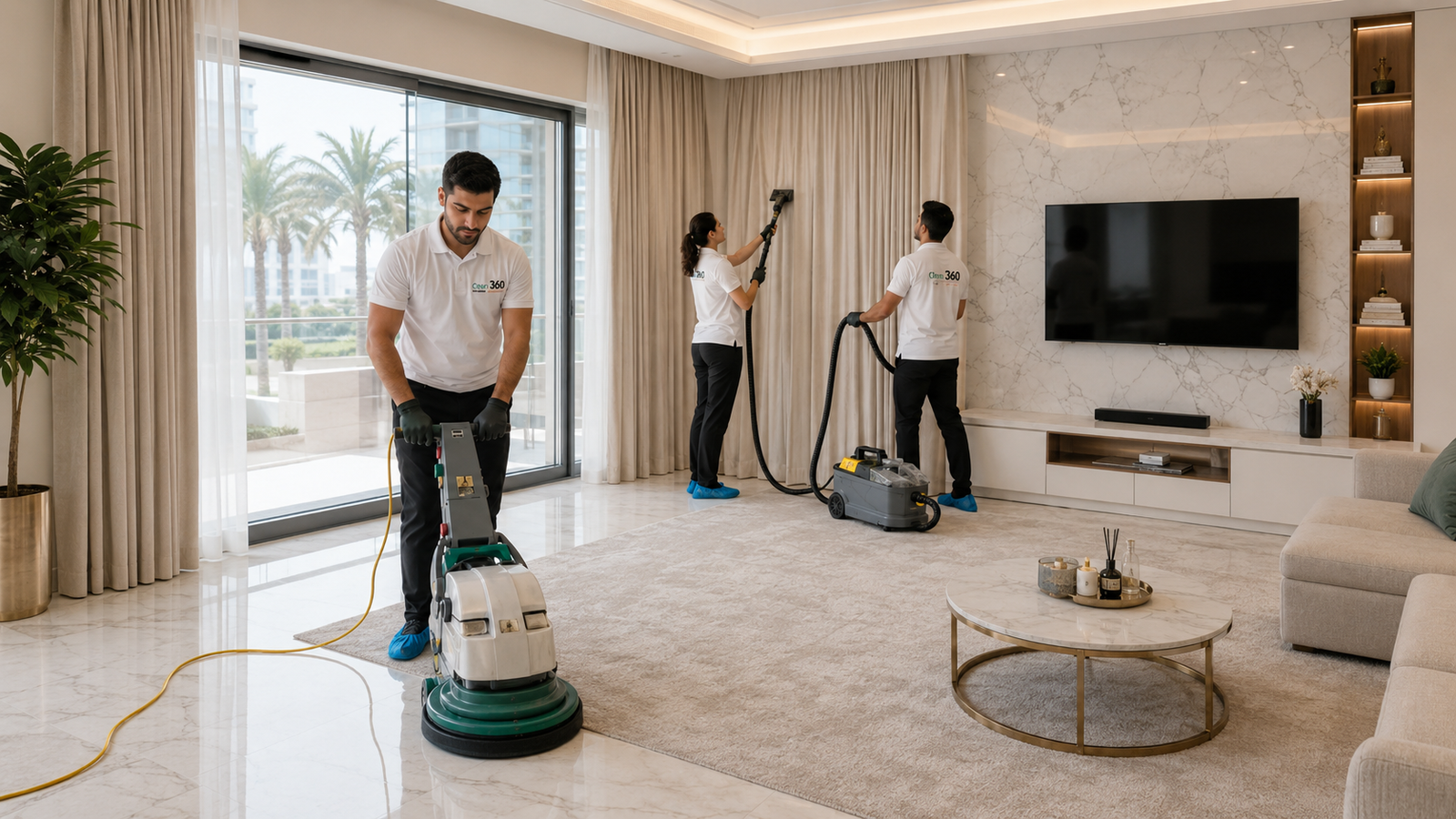
Clean360 provides professional carpet cleaning for suitable carpets across Dubai. The team reviews the material, condition, stain type and any previous treatment before selecting an appropriate method.
Professional-grade equipment and material-specific products may be used to address embedded dirt, suitable stains and residue. The team also explains what can realistically be achieved before treatment begins.
Clean360 does not guarantee that every old or permanent stain will disappear. Colour loss, chemical damage, heat marks and worn fibres cannot be reversed through cleaning.
Frequently Asked Questions
What is the first thing I should do after a carpet spill?
Remove any solid material and blot fresh liquid immediately with a clean white cloth. Do not scrub. Work from the outer edge towards the centre to reduce spreading.
Can I use bleach to remove a carpet stain?
No. Bleach can remove the carpet’s colour and create permanent damage. A pale bleach mark is colour loss rather than a stain and cannot be corrected through ordinary cleaning.
Why did the stain return after the carpet dried?
Residue may remain deeper in the fibres or backing and move back towards the surface as the carpet dries. Excess detergent can also attract new dirt and make the treated area appear dark again.
Can professional carpet cleaning remove every stain?
No. Many stains can be improved, but permanent removal cannot be guaranteed. Results depend on the carpet material, stain type, age and any products previously applied.
Should I scrub a stain with detergent?
No. Scrubbing can spread the stain and damage the carpet pile. Excess detergent may also leave sticky residue. Blot gently and use only a product approved for the material.
Is carpet cleaning included in home deep cleaning?
Professional extraction and stain treatment are normally separate from standard home deep cleaning. They should be requested in advance so the correct equipment and working time are included.
How long should the carpet dry after treatment?
Drying time depends on the carpet thickness, method, moisture level, airflow and indoor humidity. Avoid walking on the area or placing furniture over it until it is properly dry.
Treat the Stain Without Damaging the Carpet
Knowing how to remove stains from carpet means acting quickly but carefully. Blot instead of scrubbing, use minimal moisture and avoid mixing products. When the stain is old, widespread or linked to oil, ink or chemicals, professional treatment is usually the safer approach.
For professional carpet cleaning in Dubai, contact Clean360 by phone or WhatsApp at +971 52 996 6803 or email info@clean360.ae. Share photographs of the stain, the carpet material if known and details of anything already applied so the team can recommend a suitable treatment.