
Microfiber couches are popular because they feel soft, look neat and can handle regular household use. However, using too much water, scrubbing aggressively or choosing the wrong cleaning product can leave rings, flattened fibres or permanent discolouration.
If you are wondering how to clean a microfiber couch, begin by checking the manufacturer’s care label. Microfiber is not one single fabric type, and the safest cleaning method depends on whether the material allows water-based products, solvent-based products or professional treatment only.
Quick Answer
To clean a microfiber couch safely, vacuum the fabric first, check its care code and test the cleaning solution on a hidden area. Blot stains gently instead of scrubbing them. Use only the method permitted by the manufacturer, avoid soaking the fabric and allow the couch to dry completely before brushing the fibres.
What Is Microfiber?
Microfiber is a tightly woven synthetic material made from extremely fine fibres, commonly polyester, nylon or a blend of both.
Its dense construction can make it resistant to some everyday spills, but it can also react poorly to excessive moisture or unsuitable cleaning chemicals. Water may leave marks on some microfiber couches, while strong detergents can affect the texture or colour.
Two couches that look similar may require completely different treatment. This is why checking the care label is the most important first step.
Check the Microfiber Couch Cleaning Code
Many upholstered couches have a care label beneath the cushions or on the underside of the furniture. The label may include one of the following codes:
- W: Use a suitable water-based upholstery cleaner
- S: Use a suitable solvent-based cleaner
- W/S: Either an approved water-based or solvent-based cleaner may be used
- X: Vacuuming or professional cleaning only
Do not treat these codes as product recommendations. They only indicate the general type of cleaning method permitted by the manufacturer.
If the label is missing, unclear or damaged, avoid experimenting with strong products. Contact the manufacturer or a professional cleaner for guidance.
How to Clean a Microfiber Couch Step by Step
The safest process depends on the fabric code, but the following preparation steps apply to most microfiber couches.
1. Remove Loose Dirt
Take off removable cushions where possible and vacuum the entire couch using a clean upholstery attachment.
Pay attention to:
- Areas beneath the cushions
- Creases and seams
- Armrests
- The back of the couch
- Edges where crumbs collect
- Spaces between fixed cushions
Removing loose dirt first prevents it from turning into muddy residue when a cleaning solution is applied.
2. Read the Care Label
Find the fabric care code before using water, alcohol, detergent or any commercial product.
A couch marked “S” may develop water rings if cleaned with a water-based solution. A couch marked “X” should not be treated with liquid cleaners at home.
Skipping this step is one of the most common causes of upholstery damage.
3. Test a Hidden Area
Apply a small amount of the approved cleaning solution to an inconspicuous section, such as the back or underside of the couch.
Allow the test area to dry completely. Check for:
- Colour transfer
- Fading
- Water rings
- Texture changes
- Stiffness
- Dye movement
Do not continue if the fabric changes noticeably.
4. Blot the Stain
Use a clean white cloth to blot the affected area gently. A coloured cloth may transfer dye onto light upholstery.
Work from the outer edge of the stain toward the centre. This can help prevent the mark from spreading.
Do not rub rapidly or press too hard. Aggressive scrubbing may damage the fine fibres, push the stain deeper or create a visibly worn patch.
5. Use Minimal Moisture
Apply the approved product to the cloth rather than pouring it directly onto the couch. Use only enough to treat the affected area.
Microfiber should not be saturated. Excess liquid can enter the cushion filling, slow the drying process and create visible rings or lingering odours.
For a larger dirty area, clean the section evenly instead of treating one tiny spot heavily. This may help reduce uneven marks, but only when the care instructions permit the selected method.
6. Allow the Couch to Dry
Let the treated area dry naturally with good indoor airflow. Keep children and pets away from the couch during this period.
Do not sit on the fabric while it is damp. Avoid covering it with blankets or plastic because this can restrict airflow.
Drying time depends on:
- The amount of moisture used
- Fabric thickness
- Cushion filling
- Indoor humidity
- Air circulation
- Cleaning method
7. Restore the Texture
Microfiber can feel slightly stiff or look flattened after cleaning.
Once the fabric is completely dry, gently brush the area using a clean, soft upholstery brush. Work lightly and follow the natural direction of the fibres.
Do not brush wet fabric or use a hard-bristled brush.
How Should You Treat Common Stains?
Different stains require different treatment. Before applying any product, follow the manufacturer’s care instructions and test it on a hidden area.
Food and Drink Spills
Blot fresh liquid immediately with a clean, absorbent cloth. Do not rub the spill into the fabric.
Remove solid residue carefully with a spoon or blunt edge. Avoid scraping aggressively, as this may damage the fibres.
Greasy Marks
Oil-based stains can be difficult to remove using ordinary household detergent. Applying too much soap may leave sticky residue that attracts more dirt.
For large or old grease stains, professional sofa cleaning Dubai services may be safer than repeated home treatment.
Ink and Makeup
Ink, lipstick and cosmetic products can spread quickly when treated with the wrong solution.
Avoid mixing several products or using bleach. If the first safe treatment does not improve the stain, stop before causing permanent colour damage.
Old or Previously Treated Stains
Old stains may have already bonded with the fibres. Heat, strong chemicals and repeated scrubbing can also set stains permanently.
Professional cleaning may improve the appearance, but complete removal cannot be guaranteed.
“Microfiber stain-removal results depend on the fabric, stain type, age and products previously applied.”
What Should You Avoid?
When learning how to clean a microfiber couch, knowing what not to do is just as important as knowing the steps.
Avoid:
- Using water without checking the care code
- Pouring cleaner directly onto the couch
- Saturating the fabric
- Scrubbing stains aggressively
- Using bleach
- Mixing cleaning chemicals
- Applying strong laundry detergent
- Using heat to speed up drying
- Sitting on the couch before it is dry
- Repeating treatment without checking the results
Steam cleaning should also not be used automatically. Some microfiber couches may tolerate professional steam-based methods, while others can be damaged by heat or moisture.
Can You Deep-Clean a Microfiber Couch at Home?
Minor surface marks may be manageable at home when the care code is clear and the correct product is available. A full deep clean is more complicated.
Professional upholstery cleaning equipment controls how the solution is applied and extracted. Cleaning specialists can also assess colour stability, moisture sensitivity, seams, trims and cushion construction before beginning.
Consider professional cleaning when:
- The care label is missing
- The couch is heavily soiled
- Several cushions need treatment
- Stains are old or widespread
- The fabric has previously reacted to water
- The couch has persistent odours
- Home cleaning has left rings or residue
- The material is delicate or expensive
Sofa cleaning is not automatically included in a standard apartment or villa deep clean. It should be requested as a separate upholstery service.
How Clean360 Cleans Microfiber Upholstery
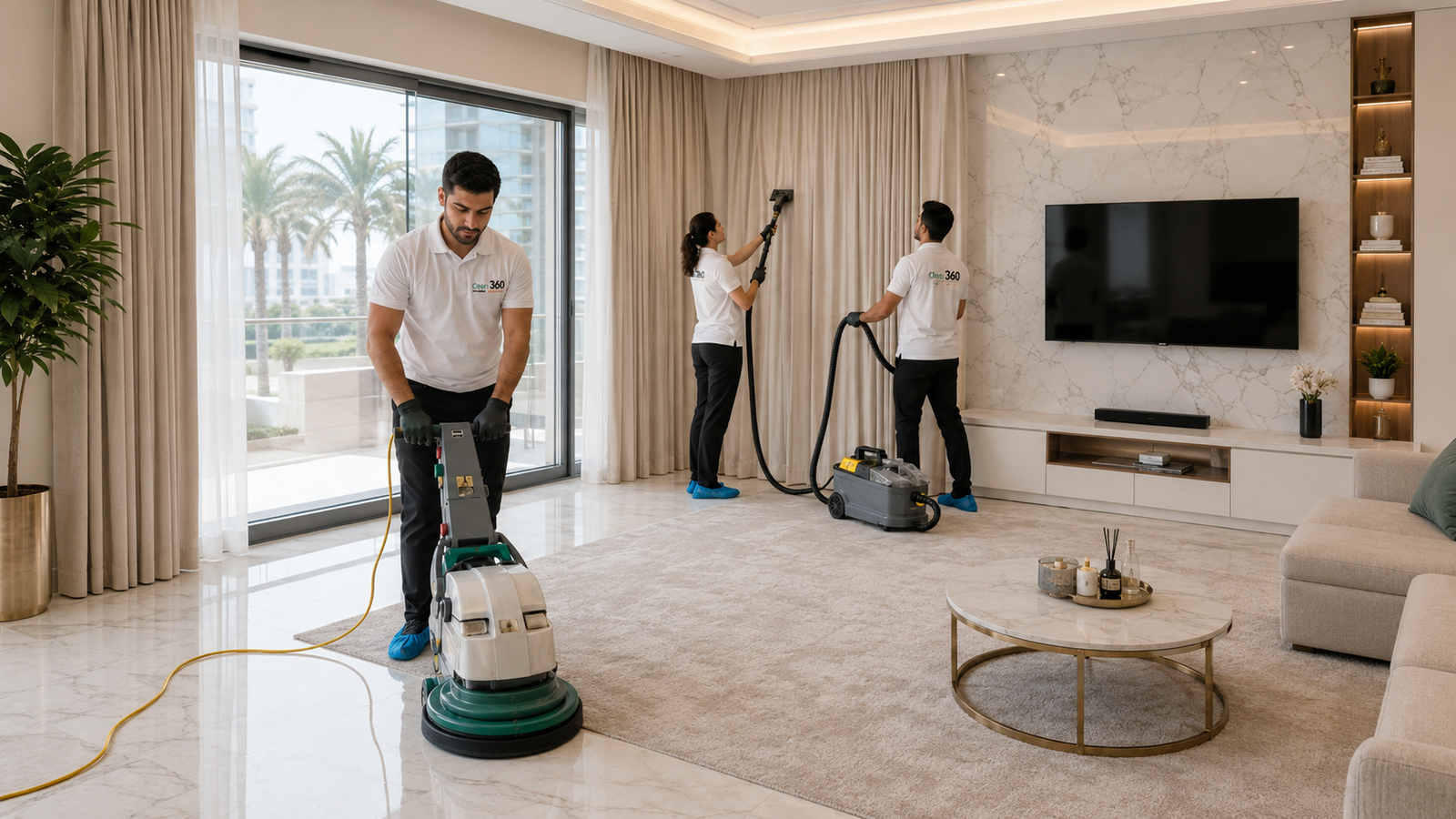
Clean360 provides material-specific cleaning for suitable sofas, chairs and other upholstered surfaces across Dubai.
The team inspects the fabric, visible stains and previous treatment before selecting an appropriate method. The service may include vacuuming, stain treatment, odour treatment and deep extraction where suitable.
Professional-grade equipment and fabric-appropriate solutions are used with care intended to preserve the colour, texture and durability of the upholstery.
Clean360 does not guarantee that every stain can be removed. Permanent results depend on the material, type of stain, age and any chemicals previously applied.
Frequently Asked Questions
Can I use water to clean a microfiber couch?
Only use water when the couch’s care label permits water-based cleaning. A couch marked “S” may develop rings or discolouration when treated with water. Test any approved solution on a hidden area first.
Can I use dishwashing liquid on microfiber?
Dishwashing liquid may leave residue or affect the texture if it is too concentrated or not permitted by the care label. Use a product designed for the fabric and follow the manufacturer’s instructions.
Why does microfiber become stiff after cleaning?
The fibres may become flattened or stiff because of dried residue or the cleaning process. Once the area is completely dry, gently brushing it with a clean, soft upholstery brush may restore the texture.
How do I remove water rings from microfiber?
Do not repeatedly soak or scrub the ring. Check the care code and consider having the area assessed professionally. Additional home treatment may enlarge the mark or create uneven colour.
Can every stain be removed from a microfiber couch?
No. Results depend on the stain, fabric, age of the mark and previous treatment. Ink, oil, dye and old chemical marks may permanently alter the upholstery.
Is professional sofa cleaning safe for microfiber?
It can be safe when the material is correctly identified and an appropriate method is selected. The cleaner should inspect the care instructions, colour stability and condition before treatment.
How long does a microfiber couch take to dry?
Drying time varies according to the cleaning method, moisture level, indoor airflow, cushion thickness and humidity. Do not use the couch until the fabric and cushion filling are properly dry.
Clean Carefully Before the Stain Gets Worse
Understanding how to clean a microfiber couch starts with the care label, not a random online remedy. Vacuum first, use minimal moisture, blot rather than scrub and stop if the fabric begins to change.
For professional sofa cleaning in Dubai, contact Clean360 at +971 52 996 6803 or email info@clean360.ae. Share clear photographs of the couch, its care label and the affected areas so the team can review the fabric and recommend a suitable cleaning method.