
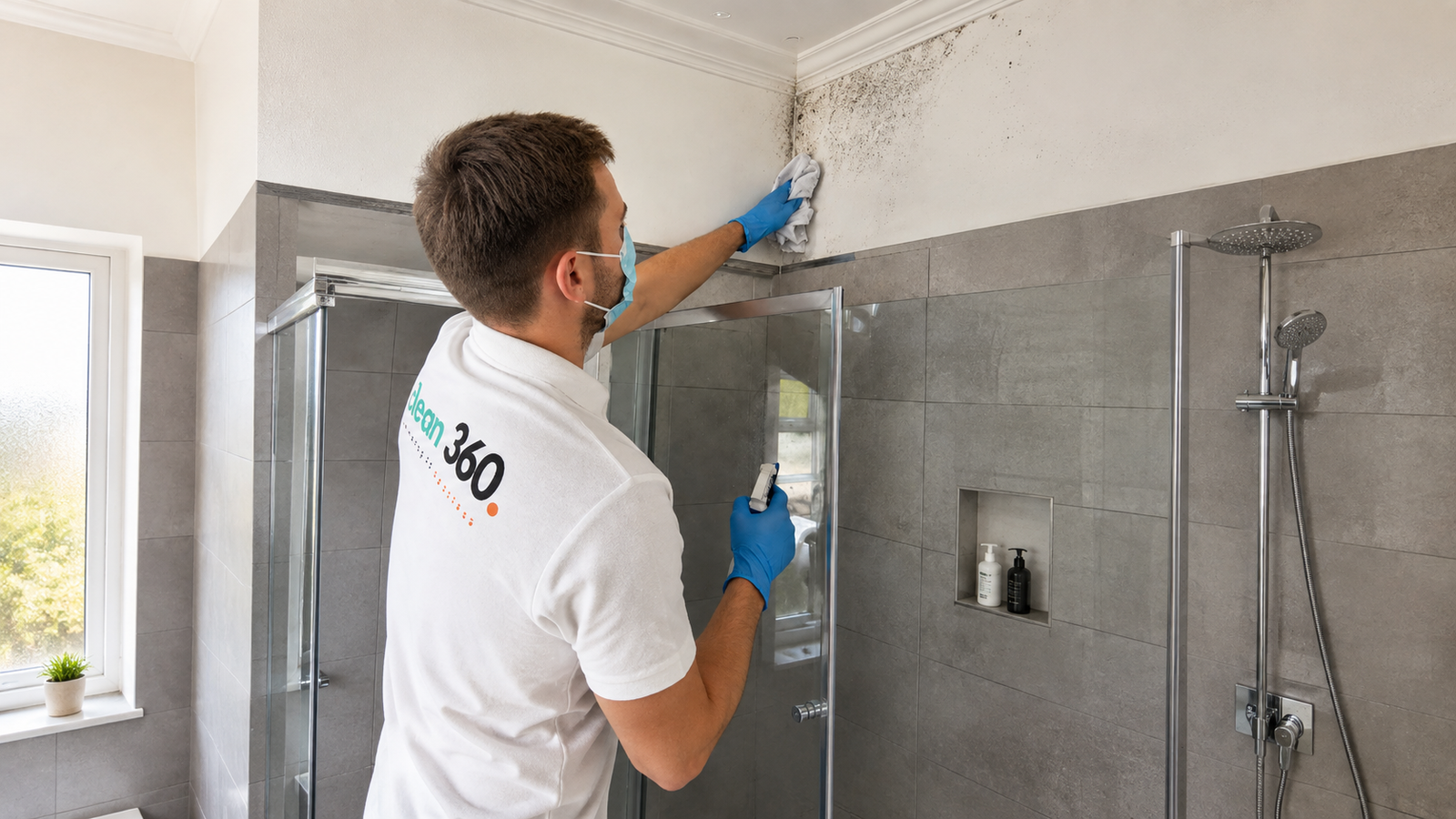
Dark marks around bathroom grout, ceilings, kitchen cabinets or air-conditioning areas are easy to mistake for ordinary dirt. Wiping the surface may make the area look better temporarily, but the marks can return when moisture, condensation or ventilation problems remain.
Professional mold removal Dubai services involve more than applying a general household cleaner. The affected area should first be assessed, then cleaned using suitable removal, disinfection and preventive treatment methods. Any contributing moisture source should also be investigated to reduce the likelihood of the mold returning.
Quick Answer
Professional mold removal in Dubai usually begins with identifying visible affected areas and checking nearby moisture-prone spaces. The process may include safe surface treatment, mold removal, disinfection and preventive treatment. Cleaning alone cannot guarantee permanent prevention if leaks, condensation, poor ventilation or another moisture source remains unresolved.
What Is Professional Mold Removal?
Professional mold removal is a specialised cleaning service that identifies visible mold-affected areas, removes suitable surface growth, disinfects treated surfaces and applies preventive treatment where appropriate.
It is different from routine bathroom cleaning or a general deep cleaning service. Ordinary deep cleaning may remove limescale, soap scum, dust and surface residue, but visible mold requires a more focused approach.
Professional treatment does not mean that every invisible spore throughout a property can be permanently eliminated. It also cannot guarantee that mold will never return.
“Mold removal is more effective when the source of moisture is identified and corrected.”
Why Is Mold Common in Dubai Properties?
Dubai properties rely heavily on air conditioning throughout much of the year. Temperature differences between cool indoor air and warm outdoor conditions can contribute to condensation in certain areas.
Mold may appear where moisture remains for extended periods, including:
- Bathroom ceilings and grout
- Shower corners
- Areas around sinks
- Kitchen cabinets near water connections
- Walls near air-conditioning units
- AC grilles and surrounding surfaces
- Window frames affected by condensation
- Areas near plumbing leaks
- Poorly ventilated storage spaces
Humidity alone is not always the cause. A hidden leak, damaged seal, blocked ventilation route or repeatedly wet surface may also contribute.
Cleaning the visible mark without addressing the reason it developed can lead to recurrence.
How Does Mold Removal Dubai Work?
The exact process depends on the location, affected surface, extent of visible growth and source of moisture.
1. Inspecting the Affected Area
The first step is to identify where visible mold is present and check nearby moisture-prone areas.
The cleaner may review:
- The size of the visible affected area
- The type of surface
- Signs of condensation
- Nearby plumbing or water sources
- Ventilation conditions
- Previous cleaning attempts
- Damage to paint, sealant or grout
- Whether the area remains damp
Photographs can help with an initial review, but some properties may need an on-site inspection before an accurate quotation or treatment plan can be confirmed.
2. Identifying Possible Moisture Sources
Professional cleaning can treat the affected surface, but it cannot repair every underlying property issue.
Possible contributing problems include:
- Plumbing leaks
- Water entering around windows
- Condensation near AC areas
- Inadequate ventilation
- Damaged bathroom sealant
- Repeated water splashes
- Wet materials that are not drying properly
- Moisture behind cabinets or fixtures
A handyman, plumber, air-conditioning technician or property maintenance team may need to correct the source.
“Mold can return after cleaning when the underlying moisture problem remains.”
3. Preparing the Area
Before treatment begins, the team may need to clear or protect nearby accessible items.
The exact preparation depends on the location. A small affected area around bathroom grout requires a different setup from a larger area behind kitchen cabinetry.
Customers should remove personal items, toiletries, food and fragile belongings from the immediate area where practical.
4. Removing Visible Mold
Suitable cleaning products and methods are selected according to the affected material.
The team may remove visible growth from appropriate surfaces while avoiding unnecessary spreading. Aggressive scrubbing is not always suitable because it may damage paint, grout, sealant or delicate finishes.
Porous materials can be more difficult to treat than hard surfaces. When mold has deeply affected damaged plasterboard, wood, insulation or another absorbent material, cleaning alone may not fully resolve the issue. Repair or replacement may need to be considered.
5. Surface Disinfection
After visible mold is removed, suitable surfaces may be thoroughly disinfected.
Surface disinfection is intended to treat the cleaned area and reduce remaining contamination on accessible surfaces. The selected product should be appropriate for the material and used according to its instructions.
The service should not be described as a medical treatment or a guarantee that every microorganism has been permanently eliminated from the property.
6. Applying Preventive Treatment
A preventive treatment may be applied to suitable areas to help inhibit future growth.
This treatment supports the cleaning process, but it cannot override ongoing leaks, condensation or ventilation problems. Customers should be cautious of any company promising that one application will permanently prevent mold under all conditions.
7. Completing a Final Check
The cleaning team should review the treated surfaces and provide practical guidance based on what was observed.
This may include advising the customer to:
- Repair a visible leak
- Improve ventilation
- Dry wet bathroom surfaces
- Monitor condensation
- Replace damaged sealant
- Arrange AC or plumbing inspection
- Avoid placing furniture tightly against damp walls
- Watch for marks returning in the same area
Is Mold Removal Included in a Deep Cleaning Service?
No. Mold remediation is not automatically included in a standard apartment or villa deep clean.
A deep cleaning service may cover:
- Bathroom tiles and grout
- Limescale removal
- Soap-scum treatment
- Surface disinfection
- Cleaning corners and fixtures
- Kitchen grease removal
- Dust removal from accessible surfaces
However, confirmed mold requires separate assessment, treatment methods, products and working time.
“A standard deep clean does not automatically include professional mold removal.”
Tell the cleaning company about visible mold before the appointment. Do not wait until the team arrives, as the correct equipment and treatment may not be included in the original booking.
Can You Remove Mold With Household Products?
Small surface marks are sometimes treated at home, but using the wrong method may damage the surface or hide the problem temporarily.
Avoid:
- Mixing bleach with other cleaners
- Applying several chemicals together
- Scrubbing painted surfaces aggressively
- Painting directly over visible mold
- Treating damp material without drying it
- Assuming every dark mark is removable dirt
- Ignoring repeated condensation
- Closing the area before it has dried properly
Painting over the affected area may hide the mark for a short time, but it does not remove the cause. The discoloration can return if moisture remains beneath the paint.
Never mix cleaning chemicals. Certain combinations can release dangerous fumes.
What Results Can You Realistically Expect?
Professional mold treatment may remove visible surface growth, clean affected areas, disinfect suitable surfaces and apply preventive treatment.
The final result depends on:
- Surface material
- Size of the affected area
- Depth of the problem
- Moisture level
- Ventilation
- Previous treatment
- Condition of paint, grout or sealant
- Whether the moisture source is corrected
Cleaning cannot restore badly damaged building materials. Peeling paint, deteriorated plasterboard, damaged wood or failed sealant may require repair or replacement after treatment.
No responsible company should promise permanent mold prevention without considering the condition of the property.
How Clean360 Approaches Mold Treatment
Clean360 provides professional mold cleaning and remediation for suitable areas in Dubai properties.
The service may include identifying visible affected areas, inspecting moisture-prone locations, safe mold removal, thorough surface disinfection and preventive treatment intended to inhibit future growth. Special attention is given to bathrooms, kitchens, AC areas and other spaces where moisture can collect.
Clean360 uses trained cleaning specialists, professional-grade equipment, surface-safe products and tailored treatment plans. The team also explains when a leak, condensation issue, ventilation problem or damaged material may need attention from another property professional.
Frequently Asked Questions
How do I know if I need professional mold removal?
Professional treatment may be needed when dark marks return after cleaning, spread across grout or walls, appear near AC areas or develop alongside persistent moisture. The affected area should be assessed before ordinary cleaning products are applied repeatedly.
Is mold removal included in deep cleaning?
No. Mold removal is normally a separate service because it requires specific assessment, products, disinfection and preventive treatment. Standard deep cleaning focuses on household dirt, grease, dust, limescale and residue.
Can mold return after professional cleaning?
Yes. Mold can return if the underlying cause remains. Leaks, condensation, poor ventilation and repeatedly damp surfaces should be corrected to reduce the likelihood of future growth.
Can professional cleaning permanently remove all mold?
Professional treatment can remove visible mold from suitable surfaces and disinfect treated areas, but it cannot guarantee that every spore is eliminated permanently. Results depend heavily on moisture control and the condition of affected materials.
Should I paint over mold marks?
No. Painting over visible mold may hide the problem temporarily without treating the affected surface or moisture source. The area should be properly assessed and cleaned before repairs or repainting are considered.
Can mold be removed from every surface?
Not always. Hard, suitable surfaces may respond well to professional treatment. Deeply affected porous materials, damaged plasterboard, wood or insulation may require repair or replacement rather than cleaning alone.
Does mold removal fix leaks and ventilation problems?
No. Mold cleaning treats the affected surface. Plumbing leaks, AC issues, damaged seals and ventilation problems may require a handyman, plumber, technician or property-maintenance specialist.
Treat the Cause, Not Only the Visible Mark
Professional mold removal Dubai services should include assessment, safe removal, disinfection and realistic guidance about moisture control. A normal deep cleaning service may improve general bathroom or kitchen buildup, but it is not a substitute for targeted mold treatment.
To request a mold-removal assessment, contact Clean360 by phone or WhatsApp at +971 52 996 6803 or email info@clean360.ae. Share photographs, the location of the affected area and details of any leaks, condensation or previous treatment so the team can recommend the appropriate next step.