An office can look presentable in the morning and feel untidy by the end of the day. Dust settles around workstations, fingerprints appear on glass doors, pantry counters become sticky and washrooms need regular attention.
Professional office cleaning Dubai services help businesses maintain shared spaces, workstations and customer-facing areas consistently. The right cleaning plan depends on the office size, number of employees, visitor traffic, flooring, pantry use and any specialist cleaning requirements.
Quick Answer
Office cleaning in Dubai should cover workstations, floors, washrooms, pantries, meeting rooms, reception areas and frequently touched surfaces. Businesses should choose a schedule based on daily occupancy and visitor traffic. Carpet extraction, upholstery cleaning, high exterior windows and post-construction residue removal usually require separate services.
What Is Professional Office Cleaning?
Office cleaning is a planned commercial service that maintains workspaces, shared facilities and customer-facing areas using suitable products, equipment and agreed cleaning schedules.
It differs from occasional residential cleaning because offices usually have higher foot traffic, shared equipment and fixed operating hours. Cleaners may need to work before opening, after closing or around employees without interrupting normal business activity.
Reliable commercial cleaning services Dubai businesses consider should begin with an assessment of the property. This helps determine which areas need daily attention and which tasks can be completed weekly or periodically.
What Should Office Cleaning Dubai Include?
The exact scope should be agreed before work begins. A clear checklist makes it easier to monitor standards and avoid confusion.
Reception and Waiting Areas
The reception creates the first impression for clients, visitors and potential employees.
Cleaning may include:
- Dusting accessible surfaces
- Wiping reception counters
- Cleaning glass doors and partitions
- Vacuuming or mopping floors
- Removing fingerprints from suitable surfaces
- Emptying bins
- Arranging accessible furniture neatly
- Cleaning door handles and switches
- Wiping waiting-area tables
Furniture made from fabric may require separate professional upholstery cleaning rather than ordinary surface vacuuming.
Workstations and Open Offices
Workstations collect dust, paper residue and marks from daily use. Cleaning should be completed carefully so documents, devices and personal items are not disturbed.
The service may cover:
- Dusting accessible desk surfaces
- Wiping empty areas around equipment
- Cleaning chair bases and accessible frames
- Vacuuming beneath accessible desks
- Mopping suitable flooring
- Emptying waste bins
- Cleaning switches and door handles
- Removing dust from accessible skirting boards
Cleaners should not move confidential documents, unplug computers or rearrange personal items unless the business has given clear instructions.
Meeting Rooms
Meeting rooms may be used by employees, clients and suppliers throughout the day.
A cleaning checklist may include:
- Wiping tables
- Cleaning accessible chair surfaces
- Removing fingerprints from glass
- Emptying bins
- Cleaning presentation areas
- Vacuuming or mopping floors
- Dusting shelves and fixtures
- Arranging chairs neatly
Frequently used meeting rooms may need attention more than once during the working day, especially when food or drinks are served.
Office Pantry
Office pantries often develop grease, food residue and spills around appliances, sinks and counters.
Cleaning may include:
- Wiping countertops
- Cleaning accessible cabinet surfaces
- Cleaning the sink and taps
- Wiping appliance exteriors
- Cleaning microwave interiors when confirmed
- Removing food crumbs
- Emptying bins
- Cleaning tables and chairs
- Mopping floors
- Removing suitable grease and limescale
Refrigerator interiors and cabinet interiors may need to be scheduled separately. Employees should remove expired food before internal refrigerator cleaning begins.
Washrooms
Washrooms require consistent cleaning because several employees and visitors may use them throughout the day.
A professional service may cover:
- Cleaning toilets and sinks
- Wiping mirrors
- Polishing suitable taps and fixtures
- Removing suitable soap residue and limescale
- Disinfecting frequently touched surfaces
- Cleaning floors and accessible drains
- Emptying bins
- Restocking supplies when provided by the business
- Cleaning exterior exhaust-fan surfaces
Visible mold should not be treated as ordinary washroom dirt. Mold cleaning requires a separate assessment and appropriate remediation methods.
Floors and High-Traffic Areas
Entrances, corridors, printer areas and pantry walkways usually collect dirt faster than low-traffic spaces.
The correct cleaning method depends on whether the floor is tiled, carpeted, wooden, stone or covered with another finish.
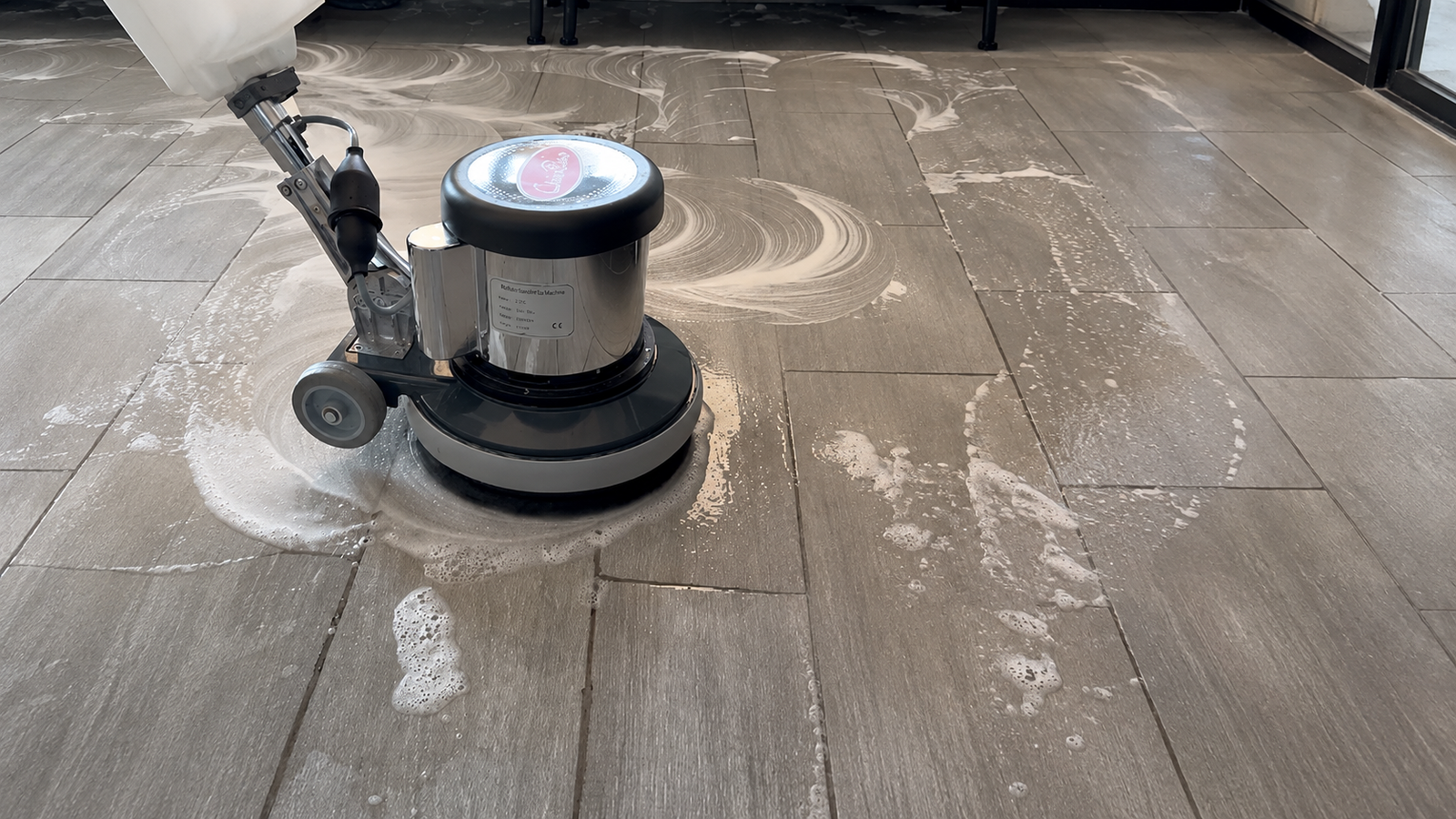
Regular office cleaning may include vacuuming and mopping. Professional carpet extraction, stain treatment or specialist floor treatment should normally be quoted separately.
“A routine office clean does not automatically include carpet extraction, upholstery cleaning or specialised floor restoration.”
How Often Should an Office Be Cleaned?
The best schedule depends on how the space is used.
Daily cleaning may be suitable for offices with:
- High employee numbers
- Frequent client visits
- Shared washrooms
- Busy pantries
- Large reception areas
- Regular deliveries
- Heavy foot traffic
Smaller offices with limited occupancy may require fewer visits, but washrooms, bins and food areas should still be monitored consistently.
Some tasks can be scheduled periodically, including:
- Detailed window cleaning
- Carpet extraction
- Upholstery cleaning
- Cabinet interiors
- High-level dusting
- Deep kitchen cleaning
- Post-maintenance cleaning
A tailored plan is more effective than applying the same schedule to every business.
What Is the Difference Between Office Cleaning and Office Deep Cleaning?
Regular office cleaning maintains the property during normal use. Office deep cleaning focuses on accumulated dirt and areas that are not covered during everyday maintenance.
A deep clean may include:
- Detailed skirting-board cleaning
- Cleaning behind accessible furniture
- Removing built-up pantry grease
- Cleaning cabinet interiors
- Detailed washroom descaling
- Cleaning accessible vents and grilles
- Treating overlooked corners
- Cleaning doors, frames and switches
- Detailed window-track cleaning
Deep cleaning may be useful before moving into a new office, after a long period of use or before an important inspection.
Post-construction cleaning is different. If an office has recently been renovated, fine building dust and suitable paint, glue, silicone or cement residue require a specialist post-construction service.
What Should Businesses Check Before Hiring a Cleaning Company?
Price is important, but it should not be the only factor.
Before choosing a provider, ask:
- Which tasks are included?
- How many cleaners will attend?
- Are products and equipment provided?
- Can the schedule work around office hours?
- How are confidential areas handled?
- Are specialist services quoted separately?
- How are delicate surfaces treated?
- Is there a quality-check process?
- What happens when additional work is required?
A reliable company should provide a clear scope and realistic expectations. It should not describe every specialist service as part of one basic package.
How Should an Office Prepare for Cleaning?
Businesses can help cleaners work efficiently by reducing unnecessary obstacles.
Before the service:
- Secure confidential documents
- Remove valuable personal items
- Clear food from counters
- Label restricted areas
- Confirm access instructions
- Arrange parking or loading access
- Identify delicate finishes
- Report stains or damage
- Explain which equipment must not be moved
- Confirm water and electricity availability
Employees should be informed of the cleaning schedule so desks and shared areas can be left reasonably accessible.
What Affects the Cleaning Quotation?
The final price may depend on:
- Total office size
- Number of rooms
- Number of washrooms and pantries
- Employee and visitor traffic
- Floor types
- Cleaning frequency
- Access and parking
- Working-hour restrictions
- Specialist equipment
- Additional services
- Current condition
A newly occupied office may require less initial work than a property with built-up grease, stained carpets or renovation dust.
Large offices and properties with complex requirements may need an inspection before an accurate quotation can be prepared.
How Clean360 Approaches Professional Cleaning
Clean360 is a family-run professional cleaning company founded by a husband-and-wife team. The company focuses on careful work, tailored cleaning plans, professional equipment and detailed quality checks.
Its trained cleaning specialists use material-specific methods and surface-safe products, with steam-cleaning technology used where appropriate.
Clean360 is verified as serving properties across Dubai. Businesses requiring office or commercial cleaning should contact the team to confirm the exact service scope, schedule and property requirements before booking.
Frequently Asked Questions
What is included in office cleaning in Dubai?
Office cleaning may include workstations, floors, reception areas, meeting rooms, pantries, washrooms, bins and frequently touched surfaces. The exact scope depends on the agreed package. Carpet extraction, upholstery cleaning and specialist window cleaning usually require separate quotations.
How often should an office be professionally cleaned?
The schedule depends on employee numbers, visitor traffic and shared facilities. Busy offices may require daily cleaning, while smaller offices may need fewer visits. Washrooms, bins and pantry areas generally require more frequent attention than low-use rooms.
Is carpet cleaning included in commercial cleaning services Dubai businesses book?
Routine vacuuming may be included, but professional carpet extraction and stain treatment are usually separate services. Businesses should identify stained or heavily used carpeted areas when requesting a quotation.
Can office cleaning be completed after business hours?
Cleaning may be arranged around operating hours, depending on the company’s availability and the building’s access rules. Businesses should confirm security procedures, parking, lift access and authorised entry before scheduling an after-hours service.
Does office cleaning include inside refrigerators and cabinets?
Internal refrigerator and cabinet cleaning may be included when specifically requested. Employees should remove food, personal items and confidential materials before the cleaners arrive so accessible areas can be cleaned properly.
Is post-construction cleaning the same as office deep cleaning?
No. Office deep cleaning addresses accumulated workplace dirt, grease and dust. Post-construction cleaning targets fine building dust and suitable paint, glue, silicone or cement residue after renovation or fit-out work.
Do large offices need an inspection before pricing?
An inspection may be necessary when the office is large, has several floors or includes complex access and specialist requirements. It allows the cleaning company to calculate the correct team, equipment, schedule and scope.
Choose a Cleaning Plan That Matches the Workplace
Professional office cleaning Dubai services should be built around the way the business operates. Workstations, washrooms, pantries and customer-facing areas may all need different cleaning frequencies.
For office or commercial cleaning advice, contact Clean360 by phone or WhatsApp at +971 52 996 6803 or email info@clean360.ae. Share the office size, location, working hours and required services so the team can confirm availability and prepare an appropriate cleaning quotation.